Obtain an initial assessment

Energy & infrastructure

Typical Challenges in Energy & Infrastructure

Large-scale storage systems generate revenue on the power market and support the grid; at EV charging hubs, they bridge grid connection bottlenecks. The graphs illustrate typical load and generation profiles.

Projects in Energy & Infrastructure
Project Type
Application

Typical Use Cases in Energy & Infrastructure

These use cases are particularly common for large-scale storage systems and EV charging infrastructure, marketed either individually or in combination.

Charging station infrastructure
Intraday Trading
Multi-Use Battery Storage

Frequently Asked Questions about Battery Storage in Energy & Infrastructure

Large-scale storage systems combine multiple revenue streams: in day-ahead and intraday trading, they charge when prices are low and feed power back in when prices are high. Through balancing services (FCR, aFRR), they reserve capacity to maintain grid stability and receive compensation. Which combination is most profitable depends on market prices and multi-market revenue stacking.

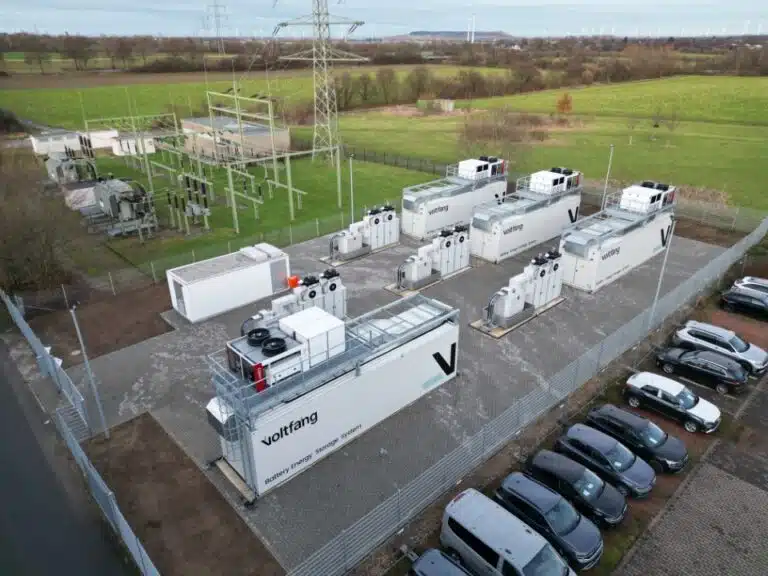
A 20 MWh / 9.5 MW storage system is currently operating in Alsdorf. In Aachen, a 21 MWh / 10 MW facility is under development, with commissioning scheduled for Q4 2026. Voltfang is delivering both projects as full-EPC contractor and handles ongoing technical operations.

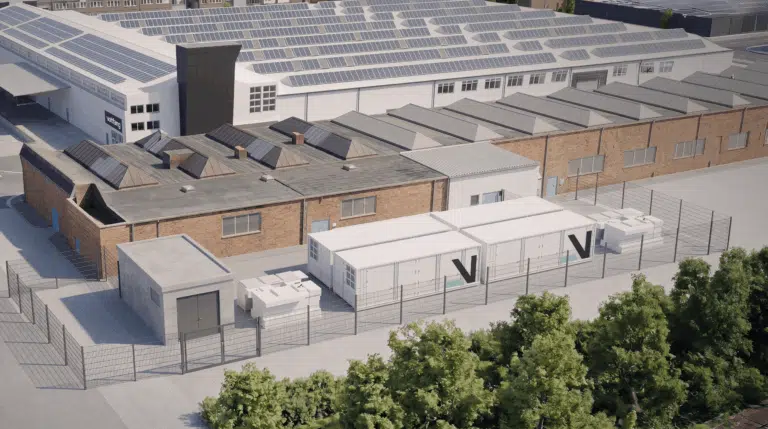
Securing new grid connections often takes years. Existing connection capacity can frequently be leveraged, such as at an existing substation, as in Aachen. At charging hubs, the battery storage buffers peak charging loads so that a smaller grid connection suffices: JET in Hamburg charges at 300 kW on an 80 kW connection.

Grid operators are permitted to charge it. In its decision of July 15, 2025 (EnVR 1/24), the German Federal Court of Justice (BGH) ruled that the Federal Network Agency (Bundesnetzagentur) is not required to prohibit a grid connection cost contribution based on the capacity pricing model. The exact amount is determined by the grid operator. This information does not constitute legal advice.

We assess the site and grid connection, engineer the storage system, and implement it as a general contractor (full-EPC). Following commissioning, we provide technical operations and maintenance upon request.

For an initial assessment, we simply need the location, your project timeline, and details regarding the grid connection, such as voltage level and available capacity. For EV charging hubs, we also require the number and power rating of the charging points. If you already know the required capacity and power output, we will provide a proposal directly.