Typical energy problems in commercial & trade
From supermarkets to offices, every business has its own load profile. The charts show a typical pattern and where costs arise.
Projects in commercial & trade
Practical case studies: Voltfang in action
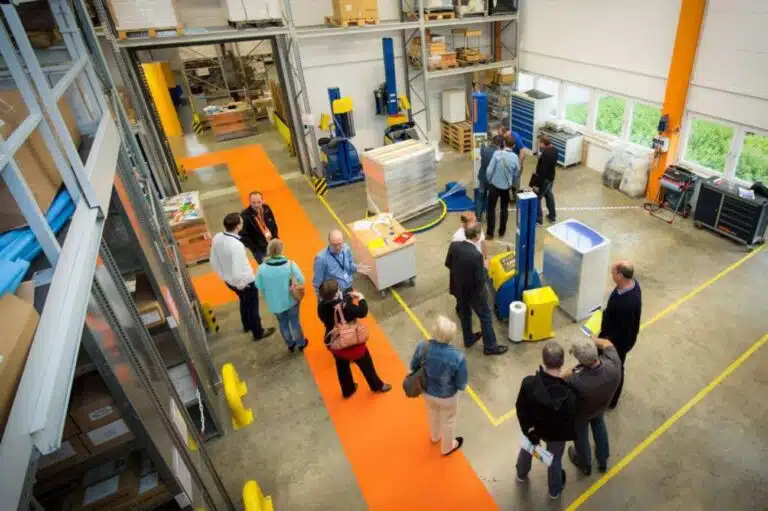
Discover in our practical case studies how companies from industry, retail, and logistics are successfully using Voltfang battery storage systems. Learn more – from detailed load profile analyses and impressive cost savings to the innovative technologies behind them.
Download case study
Typical use cases in commercial & trade
These use cases are used particularly frequently in commercial and trade—individually or in combination.
Frequently asked questions about battery storage in commercial & trade
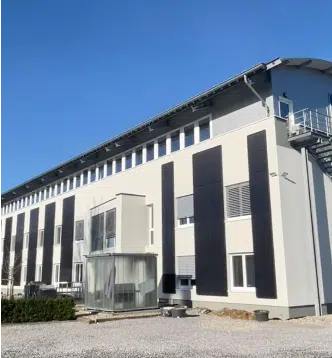
That depends on the use case: for peak shaving, power in kW matters; for solar power in the evening, capacity in kWh. The right size is determined by your load profile, PV generation and planned charging points. The Voltfang commercial storage system starts at 255 kWh capacity and 125 kW power. At the PV and charging park in Auggen, 360 kWh of storage works together with 22 charging points.
Without storage, a business only uses the solar power it needs at that exact moment. The battery shifts the midday surplus into the evening. How high self-sufficiency gets depends on consumption, PV size and opening hours. The ALDI Nord store in Gütersloh reaches 45%, Hotel zur Post 47%, and the PV and charging park in Auggen 77%.
Yes—with charging management and storage. Charging management distributes the available power across the charging points, and the battery provides additional power when many vehicles charge at the same time. This prevents the peak at the grid connection from increasing. At the PV and charging park in Auggen, 360 kWh of storage works together with 22 charging points and the PV system.
Yes. Since 2025, all electricity suppliers must offer a dynamic tariff where the price follows exchange prices. The energy management system (EMS) charges the battery during cheap hours and supplies the business during expensive ones. Together with the PV system and charging points, this allows a larger share of consumption to be shifted into low-price hours.
After your inquiry, we request technical data, prepare a quote and plan the project during an on-site visit. After you place the order, we obtain permits, implement the project and support the battery during operation.
For an initial assessment, just a few details are enough: industry, annual electricity consumption and location. For a profitability calculation, we also need your load profile in 15-minute values and a current electricity bill. If you have metered demand, you can obtain the load profile from your grid operator or metering point operator. Data on the PV system and planned charging points is also helpful. If you already know the capacity and power, we can prepare a quote right away.